
loader

Facts

Skin rejuvenation, fine lines, sun-damaged skin, age spots and selected pigmentation changes, acne scars and selected other scars, uneven skin texture, facial redness, visible superficial blood vessels, and other suitable skin concerns depending on the laser technology used.

Approximately 20–60 minutes, depending on the treatment area and procedure.

Often not required. Topical numbing cream or local anesthesia may be used for more intensive treatments.

Careful sun protection and gentle skincare. Heat, sauna, intensive exercise, swimming and irritating skincare products may need to be temporarily avoided depending on the procedure.

Usually immediately to several days, depending on the type and intensity of treatment.

AI Generated

Definition

Laser therapy is a medical and aesthetic treatment method that uses precisely controlled light energy to target specific structures within the skin. Different laser systems operate at different wavelengths and depths, allowing treatment to be adapted to the individual skin concern.Depending on the technology used, laser therapy can be applied to improve selected pigmentation changes, visible superficial blood vessels, scars, fine lines, uneven skin texture and signs of sun-related skin aging.Because different skin types and conditions respond differently to laser energy, an individual assessment is essential before treatment. The appropriate technology, treatment parameters and number of sessions are selected according to the patient's skin type, indication and desired result.

Effect

Laser systems deliver concentrated light energy into selected structures within the skin. The target depends on the treatment: certain wavelengths can interact primarily with pigment, blood vessels or water-containing tissue.In resurfacing treatments, controlled thermal effects can stimulate skin renewal and collagen remodeling. Over time, this may improve skin texture, fine lines and selected scars.Other laser systems can specifically target unwanted pigment or superficial blood vessels while limiting damage to surrounding tissue.The effect therefore varies considerably according to the laser technology and indication being treated. Results are often gradual, and several sessions may be necessary to achieve the desired improvement.

Treatment

Which Skin Concerns Can Be Treated With Laser Therapy?

Depending on the laser system available and the individual indication, treatment may be considered for fine lines and signs of photoaging, selected pigmentation irregularities and age spots, acne scars and other suitable scars, uneven skin texture, facial redness and superficial visible blood vessels.

Laser therapy is not equally suitable for every condition or skin type. In particular, skin pigmentation influences the selection of laser technology and treatment parameters because some patients have a greater risk of unwanted pigmentation changes following treatment.

A personal consultation and skin examination are therefore required before deciding whether laser therapy is appropriate.

What Should Be Considered Before Laser Treatment?

Before treatment, the practitioner examines the skin and discusses the patient’s medical history, medications, previous treatments and desired outcome.

Patients should inform the practitioner about existing skin diseases, infections, recurrent cold sores, abnormal scarring, allergies, medications and previous aesthetic procedures.

Recent tanning and excessive sun exposure should be avoided before many laser procedures because treating recently tanned or sunburned skin can increase the risk of complications and pigmentation changes.

The exact preparation will depend on the laser system and treatment planned.

Procedure Of A Laser Treatment

Before treatment, the skin is carefully cleansed and the treatment area is assessed. Appropriate eye protection is provided whenever required.

Depending on the procedure, topical numbing cream may be applied beforehand.

The practitioner then delivers controlled laser pulses to the selected treatment areas using parameters adapted to the patient’s skin type and indication. Patients may notice warmth, tingling or a brief snapping sensation during treatment.

Cooling may be used during or immediately after the procedure to improve comfort and reduce temporary irritation.

After treatment, the skin is examined and individualized aftercare instructions are provided.

How Long Does Laser Treatment Take?

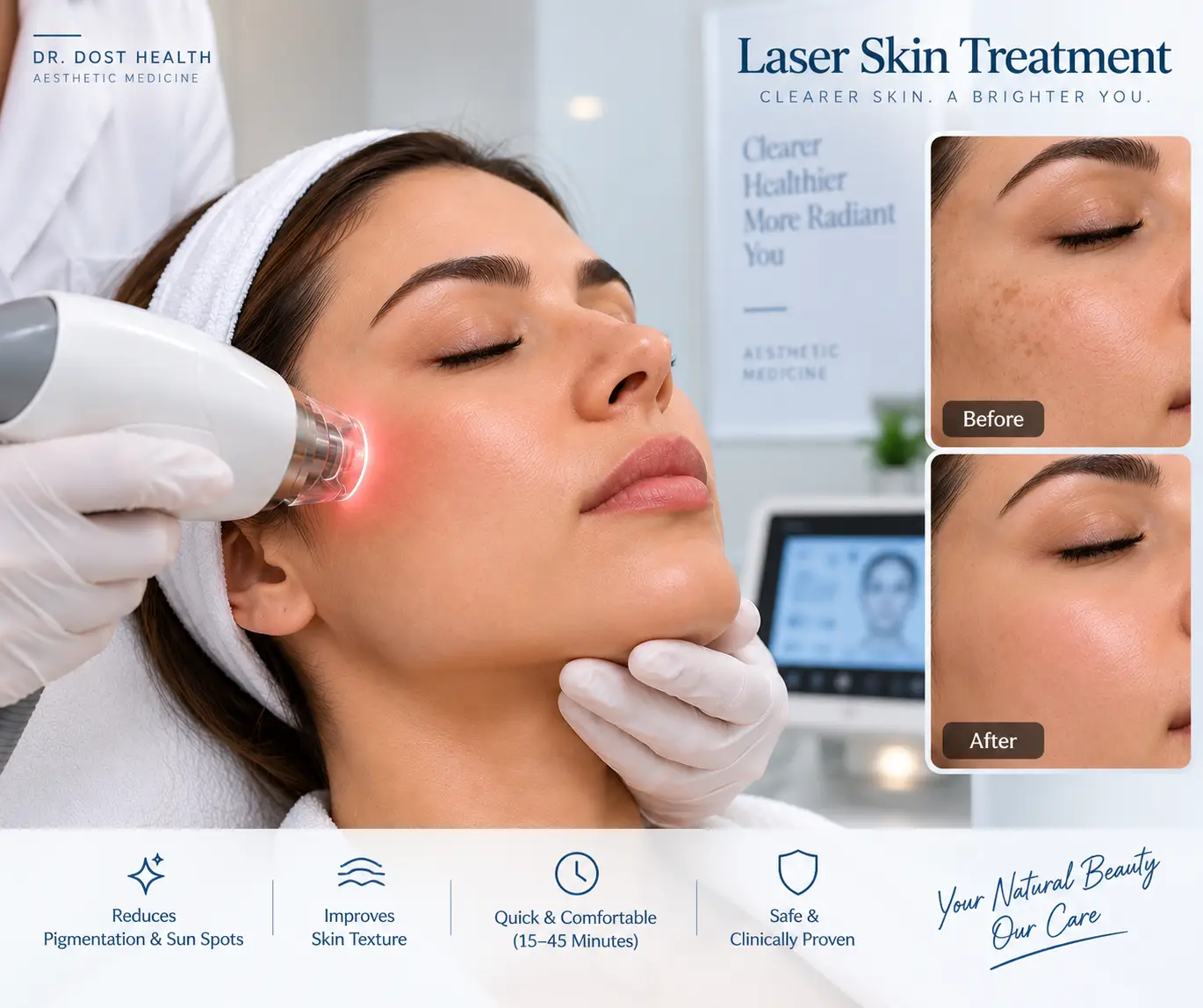
A typical treatment takes approximately 20–60 minutes.

Smaller areas may require less time, while larger areas or more extensive procedures can take longer. If topical anesthesia is required, additional preparation time should also be expected.

The number of sessions varies according to the indication, laser technology and individual response. Some conditions may improve after a limited number of sessions, while others require a planned treatment series.

What Should Be Considered After Laser Treatment?

Temporary redness, warmth, mild swelling and sensitivity can occur after laser therapy. More intensive procedures may also produce peeling or crusting during the healing process.

The treated skin should be handled gently. Patients should avoid scratching, rubbing or unnecessarily irritating the area.

Careful protection from ultraviolet radiation is particularly important. Sun exposure after laser treatment can increase the risk of unwanted pigmentation changes. Appropriate sunscreen and other protective measures should be used according to the practitioner’s instructions.

Depending on treatment intensity, strenuous exercise, sauna, steam rooms, hot baths, swimming and irritating cosmetic products may need to be temporarily avoided.

When Will The Results Be Visible And How Long Will They Last?

Results depend strongly on the indication and laser technology.

After some superficial treatments, improvement may become visible once temporary redness or swelling has subsided. Treatments designed to stimulate collagen remodeling may continue to produce gradual changes over several weeks or months.

Some patients require several treatment sessions before the desired improvement becomes apparent.

Results may be long-lasting, but laser treatment cannot stop the natural aging process or prevent new sun-related skin changes from developing. Consistent skincare and sun protection can help maintain the result.

Frequently asked questions about Laser Therapy
Who Is Not A Suitable Candidate For Laser Treatment?

Laser treatment may need to be postponed or avoided in patients with active skin infections, significant inflammation, recently sunburned or heavily tanned skin, certain photosensitizing medications or conditions affecting normal wound healing.Pregnancy, recurrent herpes infections, a history of abnormal scarring and certain medical or skin conditions should also be discussed before treatment.Suitability ultimately depends on the particular laser technology and indication.

Is Laser Treatment Painful?

Most patients tolerate laser treatment well. Depending on the technology, sensations can range from mild warmth and tingling to a brief snapping sensation.Cooling and, when appropriate, topical anesthetic cream can be used to improve comfort.

What Side Effects Can Occur?

Temporary redness, swelling, warmth and sensitivity are common after many laser procedures.Depending on the technology and treatment intensity, possible complications include blistering, burns, infection, temporary or persistent pigmentation changes, delayed healing, textural changes and, rarely, scarring.

How Many Sessions Will I Need?

There is no standard number applicable to every patient.The number of sessions depends on the condition being treated, laser technology, treatment intensity, skin type and individual response.Your treatment plan will therefore be determined after examination and consultation.

Can All Skin Types Be Treated?

Many skin types can be treated with appropriately selected laser technologies, but not every laser is appropriate for every skin tone.Skin pigmentation must be considered carefully when selecting the device and settings because the risk of pigmentation changes can differ between skin types.

Can I Return To Work After Treatment?

After gentle treatments, many patients can resume normal activities quickly.More intensive procedures may cause noticeable redness, swelling, peeling or crusting and therefore require several days of social downtime.The expected recovery period will be discussed before treatment.

Why Is Sun Protection Important?

Laser-treated skin may temporarily be more sensitive to ultraviolet radiation.Excessive sun exposure can increase the risk of irritation and unwanted pigmentation changes. Appropriate sun protection is therefore an important part of both preparation and aftercare.

  • ☏ +49 00000000000
  •  info@drdosthealth.com
  • Am Weiher 3, 84178 Kröning-Magersdorf

Gallery

Not Sure Which Treatment Is Right for You?

Not sure which treatment or specialist you need? Speak with our medical team to discuss your symptoms and find the right care for your needs.

wpChatIcon
    wpChatIcon

    Share with