
loader

Facts

Skin rejuvenation, skin texture and appearance, fine lines, selected pigmentation concerns, enlarged-looking pores, acne-prone or blemished skin, superficial scars, dull or tired-looking skin, dryness, loss of skin vitality and other suitable aesthetic skin concerns.

Approximately 30–60 minutes, depending on the procedure.

Usually not required. Topical numbing cream may be used for selected minimally invasive procedures.

Gentle skincare and appropriate sun protection. Individual aftercare depends on the treatment performed.

Usually immediately or within a few days, depending on the procedure and skin response.

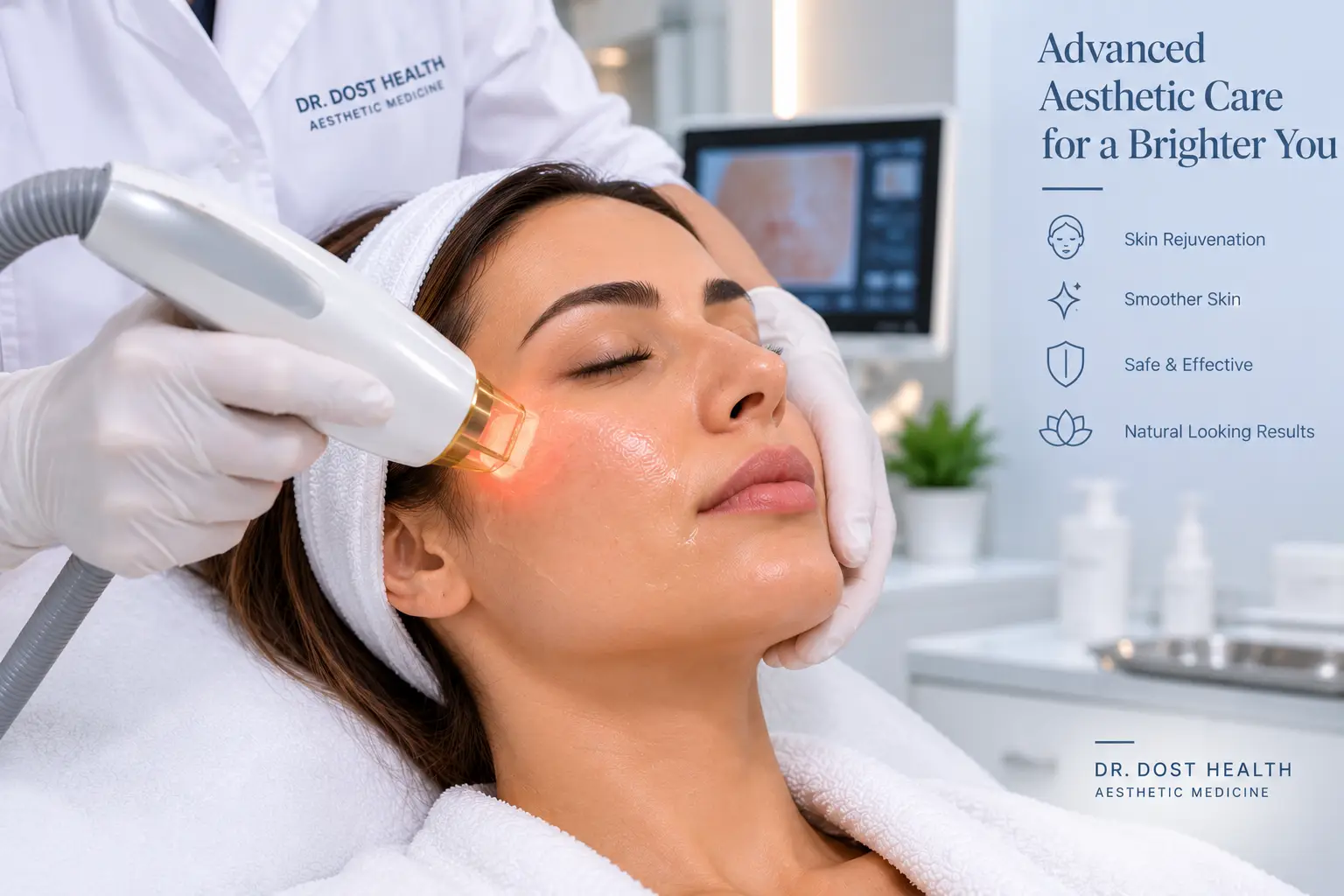
AI Generated

Definition

Cosmetic and aesthetic therapy encompasses non-surgical and minimally invasive procedures designed to improve the appearance, texture and overall quality of the skin.Rather than applying one standard treatment to every patient, aesthetic therapy begins with an individual assessment of the skin, facial characteristics and personal treatment goals.Depending on the indication, a personalized treatment plan may include professional skin treatments, chemical peels, microneedling or other medically appropriate aesthetic procedures. Injectable treatments such as botulinum toxin and hyaluronic acid can be considered separately when medically indicated and desired.The aim is to achieve a balanced and natural-looking improvement while maintaining healthy skin and respecting the patient's individual facial characteristics.

Effect

Different cosmetic and aesthetic treatments work through different mechanisms.Superficial treatments can remove accumulated dead skin cells, improve hydration and support a smoother and more radiant appearance.Chemical peels use carefully selected chemical agents to produce controlled exfoliation of the skin. Depending on their depth, they may help improve selected pigmentation irregularities, acne-related concerns, fine lines and uneven texture.Microneedling creates controlled microscopic channels in the skin and stimulates the body's wound-healing response. This process can promote collagen production and may improve selected scars and skin texture over time.Because every procedure has different effects, benefits and risks, the treatment is selected according to the patient's individual skin condition and goals.

Treatment

Which Concerns Can Be Treated With Cosmetic & Aesthetic Therapy?

Depending on the procedure, aesthetic treatment may help patients who would like to improve uneven skin texture, dull-looking skin, fine lines, selected pigmentation irregularities, acne-related skin changes, superficial scars, enlarged-looking pores or general signs of skin aging.

Treatment can also focus on maintaining healthy-looking skin and improving hydration, smoothness and overall skin appearance.

Not every concern requires an invasive procedure. Following examination, the practitioner can determine whether professional skincare, a minimally invasive procedure or another medical aesthetic treatment is appropriate.

What Should Be Considered Before Treatment?

Before treatment, the patient’s skin type, current skin condition, medical history and treatment goals are assessed.

Patients should inform the practitioner about allergies, medications, active skin diseases, infections, pregnancy or breastfeeding, previous aesthetic procedures and any tendency toward abnormal scarring.

Current skincare products should also be discussed. Products containing retinoids, acids or other active ingredients may need to be temporarily modified before certain procedures.

The practitioner will explain the expected benefits, realistic limitations, potential risks and suitable alternatives before treatment.

Procedure Of A Cosmetic & Aesthetic Treatment

The exact procedure depends on the selected therapy.

Treatment normally begins with cleansing and examination of the skin. The practitioner then prepares the treatment area and performs the selected procedure under hygienic conditions.

For professional facial or superficial skin treatments, this may involve cleansing, exfoliation and appropriate skincare.

For chemical peeling, a selected peeling solution is carefully applied for a controlled period according to the skin type and desired treatment depth.

For microneedling, a medical needling device creates controlled microscopic channels at an appropriate depth.

After the procedure, soothing or protective skincare may be applied and individualized aftercare instructions are provided.

How Long Does Cosmetic & Aesthetic Treatment Take?

Most treatments take approximately 30–60 minutes.

Treatment duration varies depending on the procedure, treatment area and whether preparation such as topical anesthesia is required.

Some treatments are performed as a single procedure, while others provide better results when completed as a planned series.

What Should Be Considered After Treatment?

Aftercare depends on the procedure performed.

Temporary redness, sensitivity, mild swelling, dryness or light peeling may occur following some treatments.

Patients should generally treat the skin gently and avoid scratching, rubbing or using irritating skincare products until the skin has recovered.

Sun protection is particularly important following procedures that temporarily increase skin sensitivity, including many chemical peels and resurfacing treatments.

After more intensive treatments, exercise, sauna, swimming, excessive heat and certain cosmetic products may need to be avoided temporarily.

The practitioner will provide specific instructions according to the procedure performed.

When Will The Results Be Visible And How Long Will They Last?

The timing of results depends on the treatment.

Some professional skin treatments can produce an immediate improvement in hydration and skin appearance.

Treatments that stimulate skin renewal or collagen production generally develop their effects more gradually. Improvements may continue over several weeks as the skin remodels.

For conditions such as acne scarring or more pronounced textural irregularities, several treatment sessions may be necessary.

Results are influenced by age, skin condition, lifestyle, sun exposure and skincare. Maintenance treatments may therefore be recommended according to individual needs.

Frequently asked questions about Cosmetic & Aesthetic Therapy
Who Is Not A Suitable Candidate For Cosmetic & Aesthetic Treatment?

Suitability depends on the procedure.Treatment may need to be postponed in patients with active infections, open wounds, significant skin inflammation, active herpes lesions or other conditions affecting the treatment area.Pregnancy, breastfeeding, medications, allergies, impaired wound healing and previous aesthetic treatments should always be discussed during consultation.

Are Cosmetic Treatments Painful?

Many superficial cosmetic treatments cause little or no discomfort.Minimally invasive procedures such as microneedling can produce mild discomfort, tingling or sensitivity. Topical numbing cream may be used when appropriate.

What Side Effects Can Occur?

The expected response depends on the procedure.Temporary redness, sensitivity, swelling, dryness or peeling can occur. More invasive treatments carry additional risks such as infection, pigmentation changes, prolonged inflammation and, rarely, scarring.These risks and appropriate aftercare will be explained before treatment.

How Many Treatments Will I Need?

The number of treatments depends on your skin condition, treatment objective and procedure.Some treatments can provide visible cosmetic improvement after one session, whereas concerns such as scars, pigmentation or textural changes may require several sessions.A personalized treatment plan will be discussed during consultation.

Can Different Aesthetic Treatments Be Combined?

Yes, selected treatments can sometimes be combined as part of an individualized treatment plan.For example, skin treatments may be planned alongside laser therapy, microneedling or injectable treatments. However, procedures should not automatically be performed together.The correct sequence and interval are determined according to the treatments involved and the time required for the skin to recover.

Can I Wear Makeup After Treatment?

This depends on the procedure.After very gentle treatments, makeup may be possible relatively quickly. Following procedures that temporarily disrupt or significantly irritate the skin barrier, makeup may need to be avoided until the skin has adequately recovered.Your practitioner will provide specific instructions.

When Can I Exercise Again?

Following superficial treatments, normal activities can often be resumed quickly.After procedures that cause greater skin irritation, strenuous exercise and activities that generate significant heat or sweating may need to be avoided temporarily.

Are The Results Permanent?

Most cosmetic skin treatments do not permanently stop skin aging.Results can be maintained through appropriate skincare, sun protection, a healthy lifestyle and, when appropriate, periodic maintenance treatments.

  • ☏ +49 00000000000
  •  info@drdosthealth.com
  • Am Weiher 3, 84178 Kröning-Magersdorf

Gallery

Not Sure Which Treatment Is Right for You?

Not sure which treatment or specialist you need? Speak with our medical team to discuss your symptoms and find the right care for your needs.

wpChatIcon
    wpChatIcon

    Share with