

No products in the cart.

Gastroesophageal reflux disease (GERD) with esophagitis is a condition in which repeated reflux of stomach contents into the esophagus causes inflammation and injury of the esophageal lining. Typical symptoms include heartburn, acid regurgitation, retrosternal discomfort, and sometimes difficulty or pain with swallowing. Persistent inflammation may lead to erosions, ulceration, bleeding, strictures, or other complications.
1. Conventional Medical Treatment
Lifestyle and dietary measures:
Weight reduction is recommended when overweight or obesity contributes to reflux. Patients may benefit from avoiding large or late meals, remaining upright for several hours after eating, and identifying individual foods or beverages that trigger symptoms. Elevating the head of the bed can help patients with nighttime reflux.
Acid suppression:
Proton-pump inhibitors (PPIs), such as omeprazole, pantoprazole, or esomeprazole, are commonly used to promote healing of reflux esophagitis and control symptoms. Treatment duration and dose depend on disease severity and clinical response.
Additional medication:
H2-receptor antagonists, antacids, or alginate preparations may be considered in selected patients for additional or intermittent symptom relief.
Further evaluation and intervention:
Persistent symptoms, swallowing difficulty, gastrointestinal bleeding, unexplained weight loss, anemia, or recurrent symptoms despite appropriate therapy warrant medical assessment and may require upper gastrointestinal endoscopy. Selected patients with persistent objectively confirmed reflux may be considered for antireflux procedures.
2. Naturopathic Treatment — Phytotherapy & Physical Measures
Complementary treatment should focus primarily on reducing reflux triggers and supporting gastrointestinal comfort.
Phytotherapy:
- Mucilage-containing preparations such as marshmallow root may traditionally be used to soothe irritated mucous membranes.
- Chamomile preparations are traditionally used for mild gastrointestinal discomfort.
- Herbal preparations should be selected carefully because some products can worsen reflux or interact with medicines.
- Peppermint or peppermint oil may aggravate reflux symptoms in some patients and is generally unsuitable when it triggers heartburn.
Physical and lifestyle measures:
- Smaller meals may reduce post-meal reflux.
- Avoid lying down soon after eating.
- Head-of-bed elevation may reduce nighttime reflux.
- Maintaining a healthy body weight and avoiding tobacco can help reduce reflux symptoms.
Complementary approaches should not replace acid-suppressive treatment when required for healing esophagitis.
3. TCM Herbal Therapy — Differentiation by Syndrome
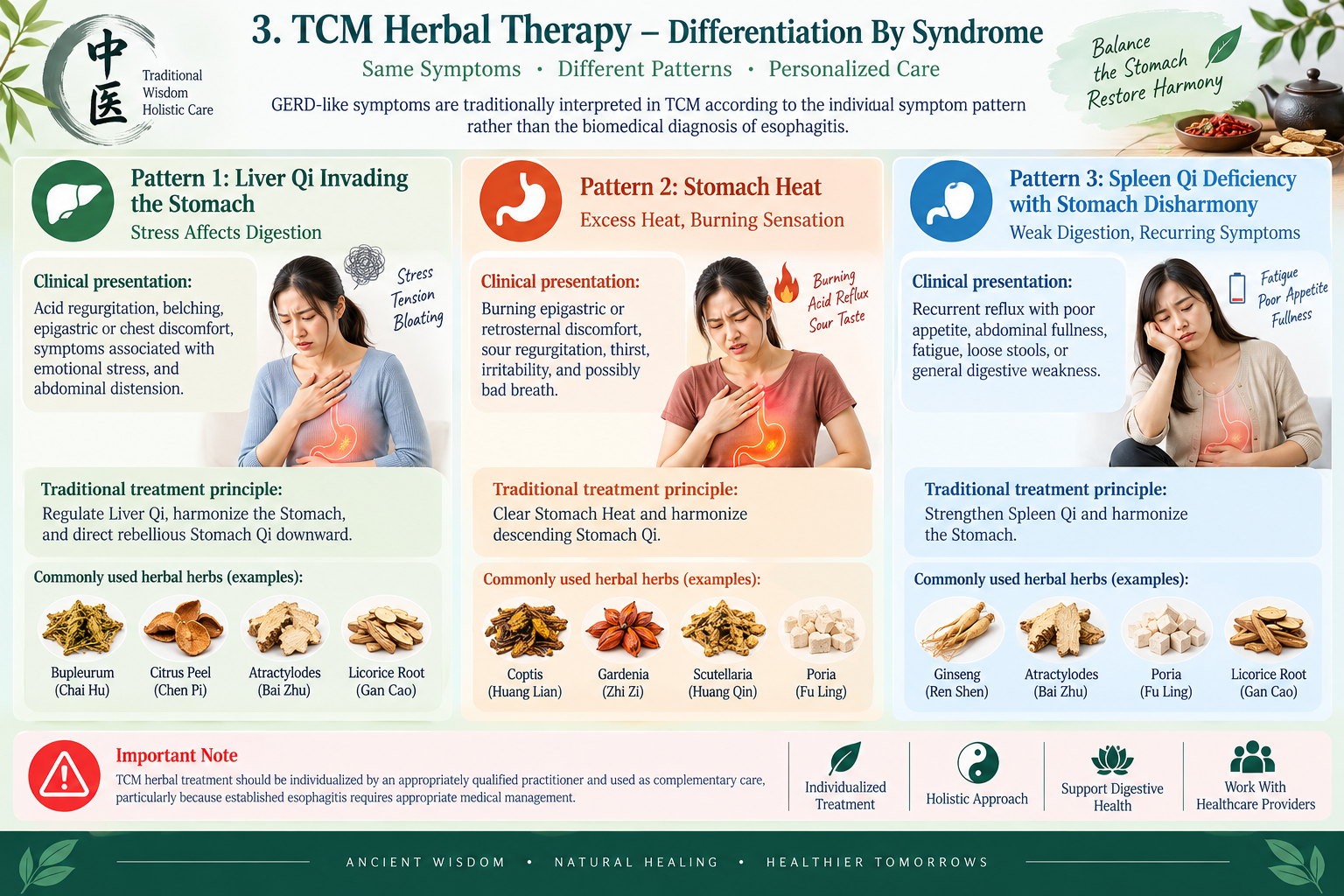
TCM Herbal Therapy for GERD Patterns
GERD-like symptoms are traditionally interpreted in TCM according to the individual symptom pattern rather than the biomedical diagnosis of esophagitis.
Pattern 1: Liver Qi Invading the Stomach
Clinical presentation: Acid regurgitation, belching, epigastric or chest discomfort, symptoms associated with emotional stress, and abdominal distension.
Traditional treatment principle: Regulate Liver Qi, harmonize the Stomach, and direct rebellious Stomach Qi downward.
Pattern 2: Stomach Heat
Clinical presentation: Burning epigastric or retrosternal discomfort, sour regurgitation, thirst, irritability, and possibly bad breath.
Traditional treatment principle: Clear Stomach Heat and harmonize descending Stomach Qi.
Pattern 3: Spleen Qi Deficiency with Stomach Disharmony
Clinical presentation: Recurrent reflux with poor appetite, abdominal fullness, fatigue, loose stools, or general digestive weakness.
Traditional treatment principle: Strengthen Spleen Qi and harmonize the Stomach.
TCM herbal treatment should be individualized by an appropriately qualified practitioner and used as complementary care, particularly because established esophagitis requires appropriate medical management.
4. Ayurvedic Treatment — Phytotherapy & Nutrition
Pathogenesis:
Reflux-like symptoms are traditionally discussed in Ayurveda in relation to Amlapitta, commonly interpreted as disturbance involving excessive acidity and aggravated Pitta, sometimes accompanied by impaired digestive regulation.
Traditional approaches:
- Dietary modification is traditionally emphasized to reduce foods that provoke burning or excessive acidity.
- Gentle, individualized Ayurvedic herbal preparations may be considered by appropriately trained practitioners.
- Regular meal timing and avoidance of overeating are traditionally encouraged.
- Herbal preparations should be medically reviewed when conventional medicines are being taken.
Nutrition:
Smaller, balanced meals may be preferred. Foods that consistently provoke reflux—often very fatty, spicy, acidic, or large meals—should be reduced according to individual tolerance. Late-night eating should generally be avoided.
5. Physiotherapeutic / Manual & Exercise Approaches
Regular moderate physical activity can support healthy body weight, general gastrointestinal health, and overall wellbeing.
Gentle diaphragmatic breathing may be used as a supportive exercise in suitable patients. Exercise immediately after a large meal, intense abdominal compression, or positions that consistently provoke reflux should be avoided.
Manual, TCM, or Ayurvedic approaches should remain complementary and should not delay medical evaluation or treatment of documented esophagitis.
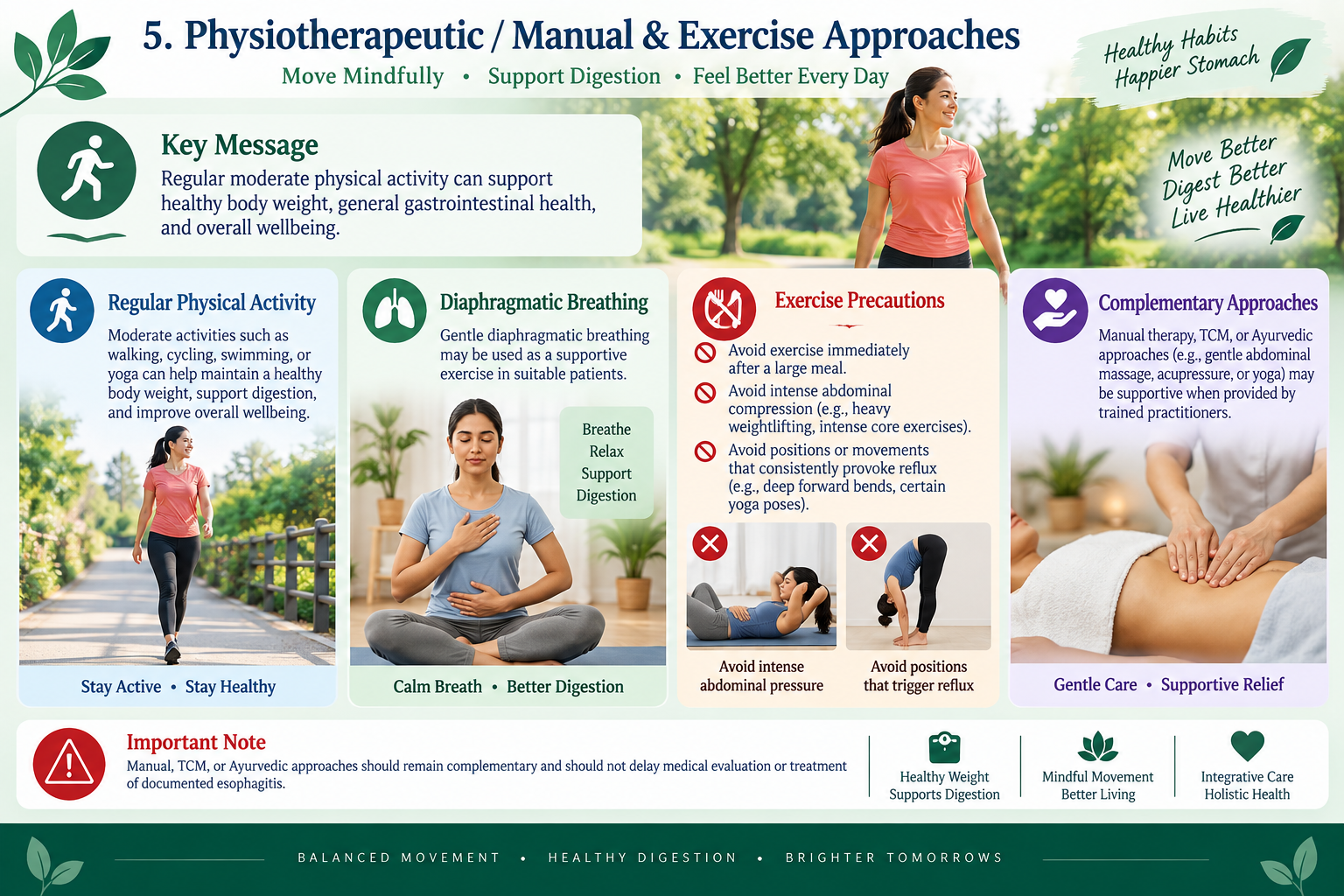
Mindful Movement for Healthy Digestion
Not Sure Which Treatment Is Right for You?
Not sure which treatment or specialist you need? Speak with our medical team to discuss your symptoms and find the right care for your needs.

