

No products in the cart.

A duodenal ulcer is a peptic ulcer involving the mucosal lining of the duodenum, most commonly the first part of the small intestine immediately beyond the stomach. The two major causes are Helicobacter pylori (H. pylori) infection and use of nonsteroidal anti-inflammatory drugs (NSAIDs). Symptoms may include burning or gnawing upper abdominal pain, nausea, bloating, or discomfort related to meals, although some ulcers cause few or no symptoms.

1. Conventional Medical Treatment
Identification of the underlying cause:
Patients should be evaluated for H. pylori infection and exposure to NSAIDs or other ulcer-promoting factors. Upper gastrointestinal endoscopy may be indicated when alarm symptoms, complications, diagnostic uncertainty, or other clinical concerns are present.
H. pylori eradication:
When H. pylori infection is confirmed, eradication therapy using an appropriate combination of acid suppression and antibiotics should be provided according to current treatment guidelines and local antimicrobial-resistance patterns. Confirmation of successful eradication is generally recommended.
Acid suppression:
Proton-pump inhibitors (PPIs), such as omeprazole or pantoprazole, are commonly used to suppress gastric acid and promote ulcer healing. Treatment duration depends on the underlying cause, ulcer characteristics, and clinical response.
NSAID-associated ulcers:
Unnecessary NSAIDs should be discontinued whenever possible. If continued NSAID treatment is medically necessary, gastroprotective therapy—usually with a PPI—may be required depending on the patient’s gastrointestinal risk.
Management of complications:
Gastrointestinal bleeding may require urgent endoscopic treatment and supportive medical care. Perforation, penetration, gastric outlet obstruction, or uncontrolled bleeding requires urgent specialist assessment and may require surgery or other interventions.
Vomiting blood, black/tarry stools, sudden severe abdominal pain, fainting, marked weakness, or other signs of significant bleeding or perforation require urgent medical evaluation.
2. Naturopathic Treatment — Phytotherapy & Physical Measures
Phytotherapy:
- Mucilage-containing preparations such as marshmallow root may traditionally be used to soothe irritated gastrointestinal mucosa.
- Chamomile preparations may provide mild digestive and antispasmodic support in suitable patients.
- Herbal preparations should be selected cautiously because some products may interact with medicines or irritate the gastrointestinal tract.
Physical and lifestyle measures:
Regular meals, adequate hydration, sufficient sleep, stress management, and avoidance of individually identified symptom triggers may support gastrointestinal wellbeing.
Smoking and excessive alcohol should be avoided. Foods that consistently aggravate pain or other symptoms may be reduced according to individual tolerance.
Complementary approaches should not replace H. pylori eradication, acid-suppressive therapy, endoscopic evaluation, or treatment of ulcer complications.
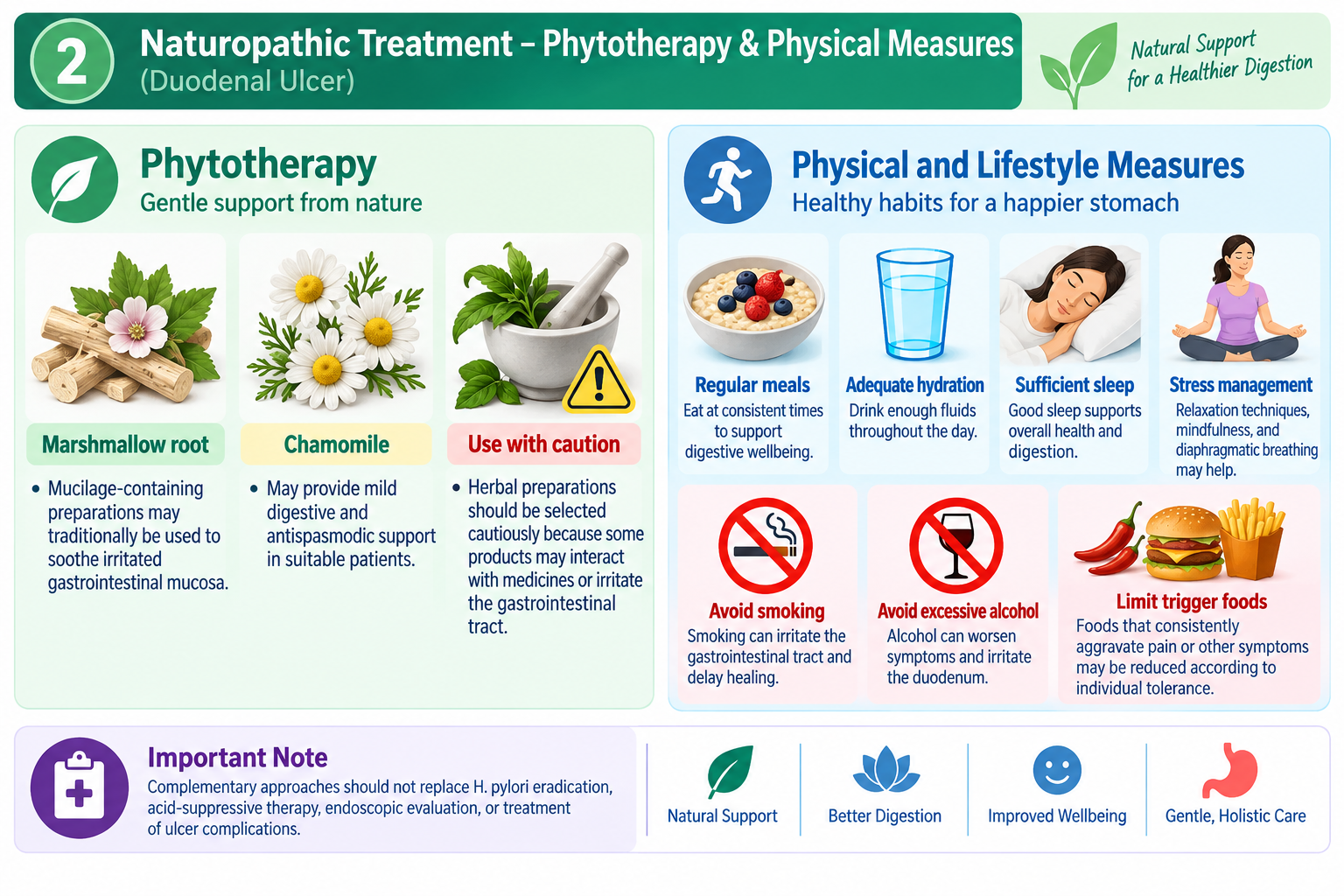
Naturopathic Support for Duodenal Ulcer
3. TCM Herbal Therapy — Differentiation By Syndrome
Duodenal-ulcer-like symptoms are traditionally interpreted in TCM according to the patient’s individual symptom pattern rather than the biomedical ulcer diagnosis.
Pattern 1: Liver Qi Invading the Stomach
Clinical presentation: Epigastric discomfort or pain, belching, abdominal distension, and symptoms that may worsen with emotional stress.
Traditional treatment principle: Regulate Liver Qi, harmonize the Stomach, and relieve pain.
Pattern 2: Stomach Heat
Clinical presentation: Burning epigastric discomfort, acid regurgitation, thirst, irritability, and possibly a bitter taste or bad breath.
Traditional treatment principle: Clear Stomach Heat and harmonize Stomach Qi.
Pattern 3: Spleen and Stomach Deficiency
Clinical presentation: Recurrent or dull upper abdominal discomfort, poor appetite, fatigue, abdominal fullness, and general digestive weakness.
Traditional treatment principle: Strengthen the Spleen, harmonize the Stomach, and support digestive function.
TCM herbal treatment should be individualized by an appropriately qualified practitioner and used only as complementary care. It should not delay established treatment for H. pylori infection or an active peptic ulcer.
4. Ayurvedic Treatment — Phytotherapy & Nutrition
Pathogenesis:
Duodenal-ulcer-like presentations may traditionally be interpreted in Ayurveda as involving disturbances of Pitta, particularly excessive heat and acidity affecting digestive function. Individual assessment may also consider Agni and other doshic disturbances.
Traditional approaches:
- Dietary and lifestyle modification traditionally focuses on reducing factors considered aggravating to Pitta.
- Soothing dietary and herbal approaches may traditionally be selected according to the individual’s constitution and symptoms.
- Stress reduction, regular meals, and appropriate daily routines may form part of traditional supportive management.
- Herbal preparations should be medically reviewed for potential interactions with prescribed medicines.
Nutrition:
Regular, balanced meals and adequate hydration may be emphasized. Foods that repeatedly provoke burning, pain, or other symptoms should be limited according to individual tolerance.
Ayurvedic treatment should remain complementary and should not replace evidence-based ulcer treatment or H. pylori eradication.
5. Physiotherapeutic / Manual & Exercise Approaches

Physiotherapy Approaches for Duodenal Ulcers
Regular moderate physical activity may support general health, stress management, healthy body weight, and overall gastrointestinal wellbeing.
Gentle walking, diaphragmatic breathing, relaxation exercises, and other low-to-moderate intensity activities may be appropriate according to the patient’s clinical condition. Vigorous exercise immediately after large meals or activities that consistently aggravate upper abdominal symptoms should be avoided.
During active severe pain, gastrointestinal bleeding, suspected perforation, or other acute complications, exercise and manual approaches are inappropriate until medically assessed. Manual, TCM, or Ayurvedic approaches should remain complementary and should not delay medical evaluation or treatment of a duodenal ulcer.
Not Sure Which Treatment Is Right for You?
Not sure which treatment or specialist you need? Speak with our medical team to discuss your symptoms and find the right care for your needs.

