

No products in the cart.

Definition — Severe Depressive Episode (ICD-10: F32.2 / F32.3)A severe depressive episode is a serious mental health condition characterized by persistent depressed mood, marked loss of interest or pleasure, substantially reduced energy, and multiple additional depressive symptoms. These may include profound fatigue, impaired concentration, feelings of worthlessness or excessive guilt, disturbed sleep, appetite or weight changes, psychomotor slowing or agitation, hopelessness, and recurrent thoughts of death or suicide.Symptoms typically cause major impairment in social, occupational, educational, and everyday functioning. Some people may have difficulty maintaining basic self-care. Severe depression may occur without psychotic symptoms (F32.2) or with psychotic symptoms such as delusions or hallucinations (F32.3). Prompt professional assessment and active treatment are required.

1. Conventional Medical Treatment
Urgent clinical assessment:
A comprehensive psychiatric and medical assessment should evaluate symptom severity, duration, functional impairment, previous depressive or manic episodes, medications, substance use, physical illnesses, psychosocial circumstances, and available support.
Particular attention should be given to suicidal thoughts, self-harm, psychotic symptoms, inability to care for oneself, and immediate safety.
Psychological treatment:
Evidence-based psychological treatment may form an important component of care. Depending on the patient’s condition, approaches may include:
- Cognitive behavioural therapy (CBT)
- Behavioural activation
- Interpersonal psychotherapy (IPT)
- Other structured psychological therapies appropriate to the individual
During the most severe phase, the person’s ability to participate in intensive psychotherapy may be limited, and treatment should be adapted accordingly.
Antidepressant medication:
Antidepressant medication is commonly considered in severe depression. SSRIs, SNRIs, or other antidepressants may be selected according to symptoms, previous treatment response, adverse-effect profile, interactions, physical health, and individual circumstances.
Treatment response and adverse effects should be monitored closely, particularly during treatment initiation and dose changes. Antidepressants should not usually be discontinued abruptly without medical guidance.
Combined treatment:
For severe depression, a combination of antidepressant medication and evidence-based psychological therapy may be appropriate.
Specialist and hospital treatment:
Urgent psychiatric assessment or inpatient treatment may be necessary when there is significant suicide risk, severe self-neglect, psychotic symptoms, inability to maintain adequate nutrition or hydration, or when safe treatment cannot be provided in the community.
Other specialist treatments:
For severe, treatment-resistant, psychotic, or life-threatening depression, specialist psychiatric treatments such as electroconvulsive therapy (ECT) may be considered when clinically appropriate. Other specialist interventions may be considered according to current guidelines and individual circumstances.
2. Naturopathic Treatment — Phytotherapy & Physical Measures
Phytotherapy:
Herbal treatments should not be used as a substitute for established medical and psychiatric treatment in severe depression.
St. John’s wort (Hypericum perforatum) is not an appropriate self-treatment for severe depression. It can interact significantly with many medicines, including antidepressants, anticoagulants, immunosuppressants, antiepileptic medicines, and hormonal contraceptives.
Combining St. John’s wort with serotonergic antidepressants can cause potentially serious adverse effects and should not be undertaken without appropriate medical supervision.
Physical and lifestyle measures:
When medically appropriate and tolerated, supportive measures may include regular daylight exposure, maintenance of sleep and waking routines, balanced nutrition, gentle physical activity, and continued supportive social contact.
Activities should be realistic and adapted to the person’s energy, physical condition, motivation, and safety.
Relaxation exercises, breathing techniques, and mindfulness-based practices may provide additional support for stress or anxiety in some individuals.
These measures are adjunctive only and should not delay psychiatric or medical treatment.
3. TCM Herbal Therapy — Differentiation by Syndrome
Traditional Chinese Medicine may interpret depressive symptoms according to individualized patterns involving emotional, physical, digestive, and sleep-related symptoms rather than the biomedical diagnosis alone.
Pattern 1: Liver Qi Stagnation
Clinical presentation: Depressed mood, emotional tension, irritability, frequent sighing, chest or abdominal tightness, and symptoms influenced by emotional stress.
Traditional treatment principle: Soothe the Liver and regulate Qi.
Pattern 2: Heart and Spleen Deficiency
Clinical presentation: Depressive symptoms accompanied by profound fatigue, poor concentration, reduced appetite, insomnia, palpitations, or excessive worrying.
Traditional treatment principle: Traditionally described as strengthening the Spleen, nourishing the Heart, and supporting Qi and Blood.
Pattern 3: Phlegm and Qi Obstruction
Clinical presentation: Mental clouding, heaviness, withdrawal, chest oppression, digestive complaints, or other symptoms traditionally associated with obstruction of Qi.
Traditional treatment principle: Traditionally described as regulating Qi, transforming Phlegm, and restoring functional balance.
In severe depression, acupuncture and Chinese herbal therapy should be considered only as complementary approaches under appropriate professional supervision and must not replace psychiatric assessment, psychotherapy, medication, or emergency treatment when indicated.
4. Ayurvedic Treatment — Phytotherapy & Lifestyle
AI Generated
Traditional perspective:
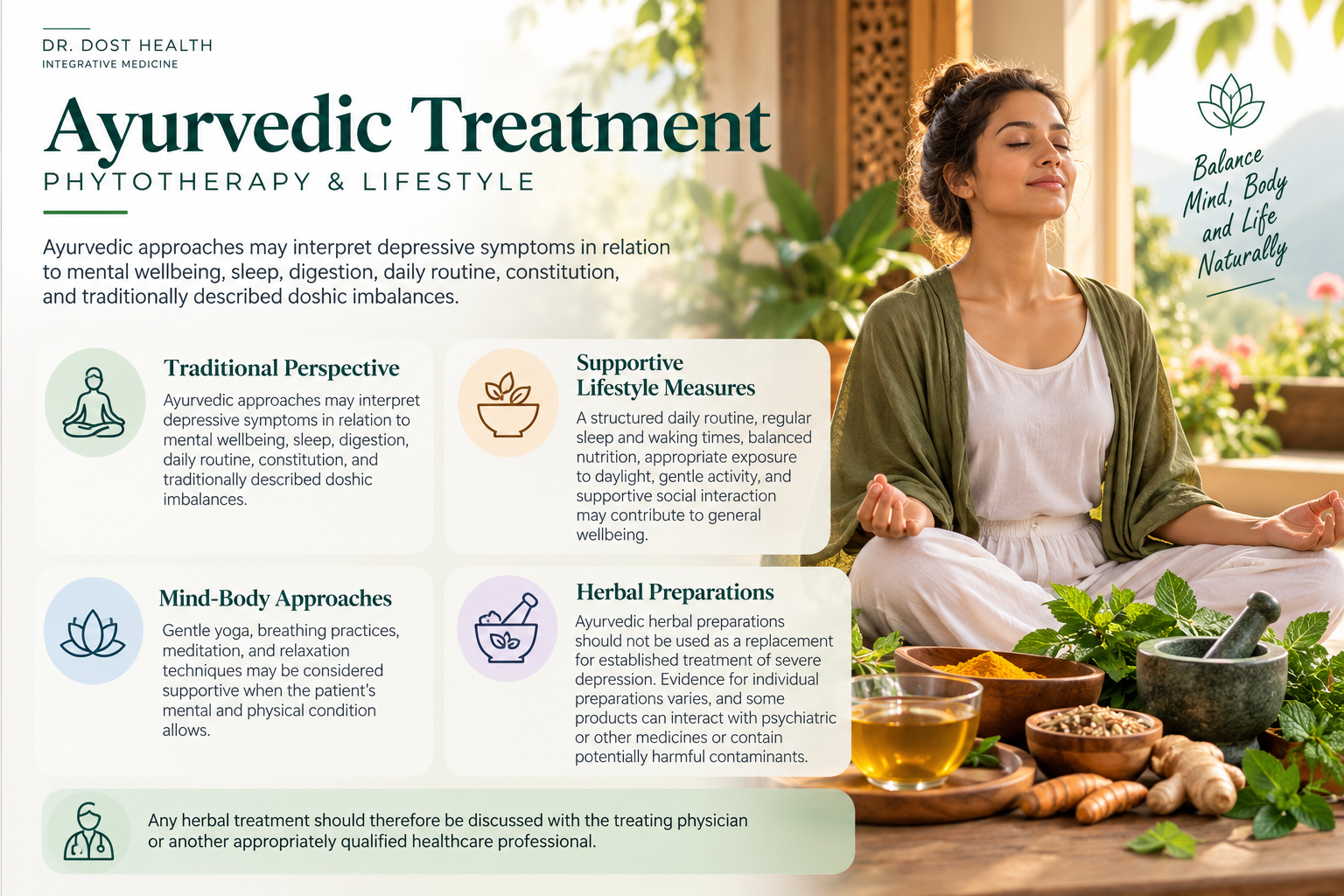
Ayurvedic approaches may interpret depressive symptoms in relation to disturbances of mental wellbeing, sleep, digestion, daily routine, constitution, and traditionally described doshic imbalances.
Supportive lifestyle measures:
A structured daily routine, regular sleep and waking times, balanced nutrition, appropriate exposure to daylight, gentle activity, and supportive social interaction may contribute to general wellbeing.
Mind-body approaches:
Gentle yoga, breathing practices, meditation, and relaxation techniques may be considered supportive when the patient’s mental and physical condition allows.
Herbal preparations:
Ayurvedic herbal preparations should not be used as a replacement for established treatment of severe depression. Evidence for individual preparations varies, and some products can interact with psychiatric or other medicines or contain potentially harmful contaminants.
Any herbal treatment should therefore be discussed with the treating physician or another appropriately qualified healthcare professional.
5. Physiotherapeutic / Manual & Exercise Approaches
Physical activity may be incorporated into a comprehensive treatment plan once it is safe, realistic, and appropriate for the individual’s clinical condition.
Gentle walking, stretching, supervised exercise, breathing exercises, or progressively structured physical activity may support physical health, sleep, daily routine, and general wellbeing during recovery.
Because severe depression can cause profound fatigue, psychomotor slowing, loss of motivation, and difficulty performing everyday activities, exercise goals should initially be small, achievable, and individualized. Assistance or supervision may sometimes be appropriate.
Progressive muscle relaxation, gentle stretching, breathing exercises, and other body-oriented techniques may help manage accompanying muscular tension, stress, and sleep difficulties.
Physiotherapy, exercise, manual treatment, TCM, Ayurveda, and other complementary approaches should remain supportive components of a broader psychiatric and medical treatment plan and should never delay necessary professional care.
Important: Severe depression can be life-threatening. Suicidal thoughts or plans, self-harm, psychotic symptoms, severe deterioration, inability to eat or drink adequately, inability to care for oneself, or inability to remain safe require urgent professional assessment.
Not Sure Which Treatment Is Right for You?
Not sure which treatment or specialist you need? Speak with our medical team to discuss your symptoms and find the right care for your needs.

