

No products in the cart.

Recurrent depressive disorder is a mood disorder characterized by repeated depressive episodes occurring over time, with periods of partial or complete improvement between episodes. During an episode, a person may experience persistent low mood, loss of interest or pleasure, reduced energy, fatigue, sleep disturbance, changes in appetite, impaired concentration, reduced self-confidence, feelings of guilt or worthlessness, and pessimistic thoughts.The severity and duration of individual episodes can vary. Because depression has occurred repeatedly, management focuses not only on treating the current episode but also on maintaining recovery, recognizing early warning signs, and reducing the risk of future episodes.

1. Conventional Medical Treatment
Clinical assessment:
A comprehensive assessment should evaluate the current symptoms, their severity and duration, previous depressive episodes, treatment history, functional impairment, physical health, medication and substance use, psychosocial circumstances, and suicide or self-harm risk.
Assessment should also consider other conditions that may produce or contribute to depressive symptoms, including bipolar disorder, anxiety disorders, medication effects, substance-related disorders, and relevant physical illnesses.
Psychotherapy:
Evidence-based psychological therapies can play an important role in both acute treatment and relapse prevention. Depending on individual needs, approaches may include:
- Cognitive behavioural therapy (CBT)
- Interpersonal psychotherapy (IPT)
- Behavioural activation
- Mindfulness-based cognitive therapy in appropriate relapse-prevention settings
- Other structured, evidence-based psychological interventions
Antidepressant medication:
Antidepressants may be recommended depending on the severity of the current episode, previous treatment response, recurrence pattern, associated conditions, patient preference, and overall clinical assessment.
Commonly used medicines include SSRIs and other antidepressants. Treatment should be individualized and monitored for effectiveness, adverse effects, interactions, and changes in symptoms.
Continuation and relapse prevention:
After recovery from an episode, treatment may need to continue for an appropriate period. People with recurrent episodes may benefit from longer-term maintenance treatment depending on their relapse risk, number and severity of previous episodes, residual symptoms, and previous response to treatment.
Regular follow-up and an individualized relapse-prevention plan can help identify early warning signs and enable timely intervention.
Safety:
Suicidal thoughts, self-harm, severe functional deterioration, psychotic symptoms, or inability to remain safe require prompt professional assessment.
2. Naturopathic Treatment — Phytotherapy & Physical Measures
Phytotherapy:
Standardized preparations of St. John’s wort (Hypericum perforatum) have evidence of benefit for some adults with mild-to-moderate depressive symptoms. However, it is not appropriate for every patient or every depressive episode.
St. John’s wort can cause significant interactions with numerous medicines, including antidepressants, anticoagulants, immunosuppressants, antiepileptic medicines, and hormonal contraceptives.
Combining St. John’s wort with serotonergic antidepressants may cause serious adverse effects and should not be undertaken without appropriate medical supervision.
Physical and lifestyle measures:
Regular physical activity, consistent sleep and waking times, balanced nutrition, appropriate daylight exposure, maintenance of social contact, and a structured daily routine may support recovery and general wellbeing.
Relaxation exercises, mindfulness-based practices, breathing techniques, and structured stress-management strategies may provide additional supportive benefits.
Complementary treatment should remain part of a broader care plan and should not replace indicated psychological or medical treatment.
3. TCM Herbal Therapy — Differentiation By Syndrome
Traditional Chinese medicine approaches depressive symptoms according to individualized symptom patterns rather than the biomedical diagnosis of recurrent depressive disorder.
Pattern 1: Liver Qi Stagnation
Clinical presentation: Low mood, emotional tension, irritability, frequent sighing, chest or abdominal tightness, and symptoms that worsen during periods of stress.
Traditional treatment principle: Regulate Liver Qi, relieve stagnation, and support emotional balance.
Pattern 2: Heart and Spleen Deficiency
Clinical presentation: Depressive mood accompanied by fatigue, poor concentration, reduced appetite, insomnia, palpitations, or general weakness.
Traditional treatment principle: Nourish the Heart and strengthen Spleen Qi.
Pattern 3: Phlegm and Qi Stagnation
Clinical presentation: Emotional heaviness, poor concentration, fatigue, chest oppression, digestive symptoms, or a subjective feeling of obstruction.
Traditional treatment principle: Regulate Qi and traditionally described Phlegm accumulation.
TCM herbal preparations and acupuncture should be individualized by appropriately qualified practitioners. Herbal products may interact with antidepressants and other medicines and should therefore be medically reviewed.
4. Ayurvedic Treatment — Phytotherapy & Lifestyle
Traditional perspective:
Ayurvedic approaches may interpret recurrent depressive symptoms in relation to mental wellbeing, sleep, digestion, daily routine, individual constitution, and traditionally described imbalances involving Vata, Pitta, or Kapha.
Supportive lifestyle measures:
A structured daily routine, regular sleep and waking times, balanced nutrition, appropriate daylight exposure, regular physical activity, and supportive social interaction may contribute to general wellbeing and recovery.
Mind-body approaches:
Gentle yoga, breathing practices, meditation, and relaxation techniques may be considered supportive when appropriate for the individual’s psychological and physical condition.
Herbal preparations:
Certain Ayurvedic herbal preparations have traditionally been used to support emotional wellbeing, sleep, or stress management. However, clinical evidence varies considerably.
Herbal products may interact with antidepressants and other medicines or contain undesirable contaminants. Their use should therefore be discussed with an appropriately qualified healthcare professional.
Ayurvedic treatment should remain complementary and should not replace clinically indicated psychological or medical treatment.
5. Physiotherapeutic / Manual & Exercise Approaches
AI Generated
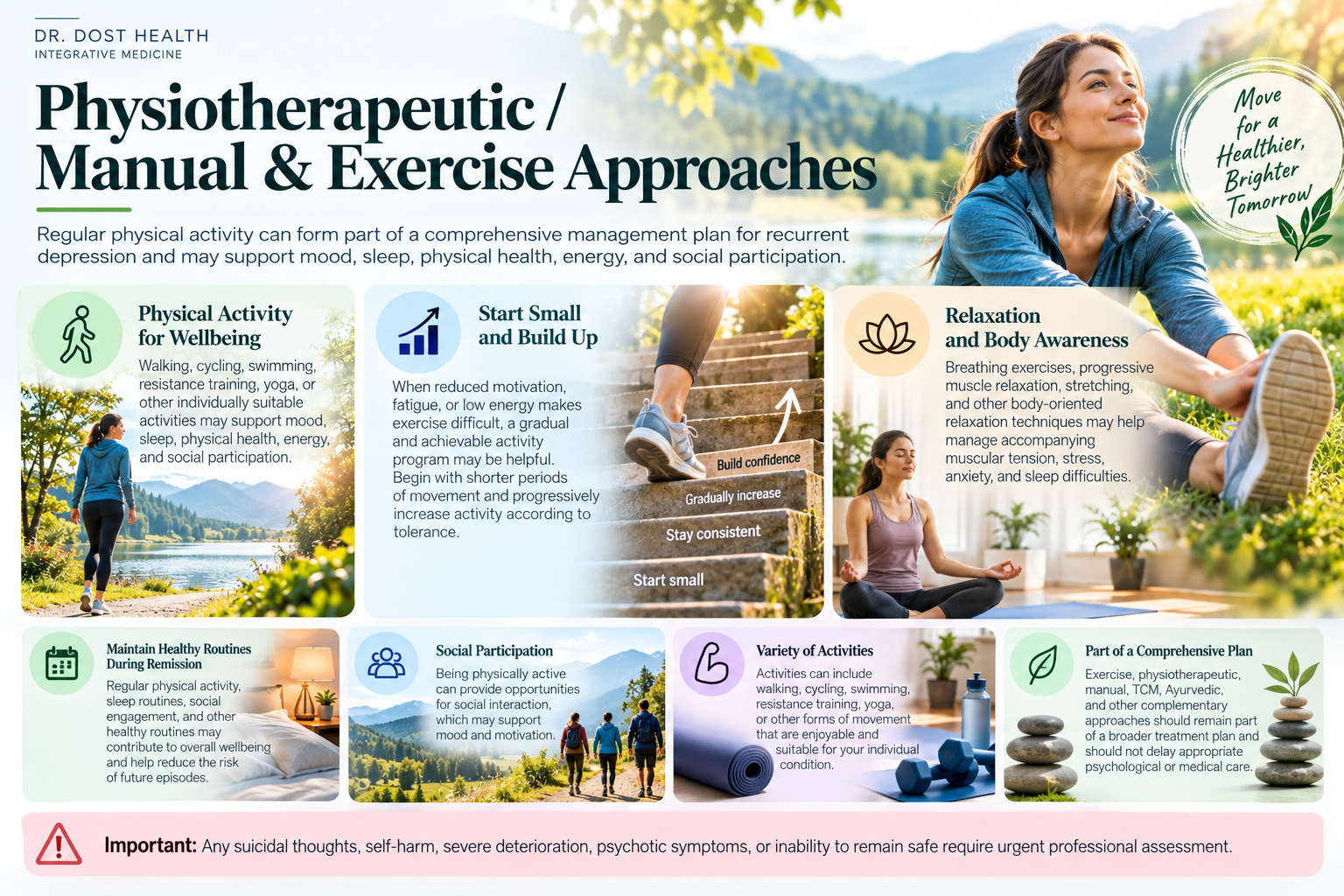
Regular physical activity may form part of a comprehensive management plan for recurrent depression. Walking, cycling, swimming, resistance training, yoga, or other individually suitable activities may support mood, sleep, physical health, energy, and social participation.
When reduced motivation, fatigue, or low energy makes exercise difficult, a gradual and achievable activity program may be helpful. Beginning with shorter periods of movement and progressively increasing activity according to tolerance can make regular exercise easier to maintain.
Breathing exercises, progressive muscle relaxation, stretching, and other body-oriented relaxation techniques may help manage accompanying muscular tension, stress, anxiety, and sleep difficulties.
During periods of remission, maintaining regular physical activity, sleep routines, social engagement, and other healthy routines may contribute to overall wellbeing and form part of an individualized relapse-prevention strategy.
Exercise, physiotherapeutic, manual, TCM, Ayurvedic, and other complementary approaches should remain part of a broader treatment plan and should not delay appropriate psychological or medical assessment and treatment.
Important: Any suicidal thoughts, self-harm, severe deterioration, psychotic symptoms, or inability to remain safe require urgent professional assessment.
Not Sure Which Treatment Is Right for You?
Not sure which treatment or specialist you need? Speak with our medical team to discuss your symptoms and find the right care for your needs.

