

No products in the cart.

Definition — Functional Dyspepsia (Indigestion) (ICD-10: K30)
Functional dyspepsia is a chronic or recurrent disorder characterized by upper gastrointestinal symptoms such as post-meal fullness, early satiety, epigastric pain, or epigastric burning without an identifiable structural disease that adequately explains the symptoms. Diagnosis is generally made after appropriate clinical assessment and exclusion of relevant organic causes.
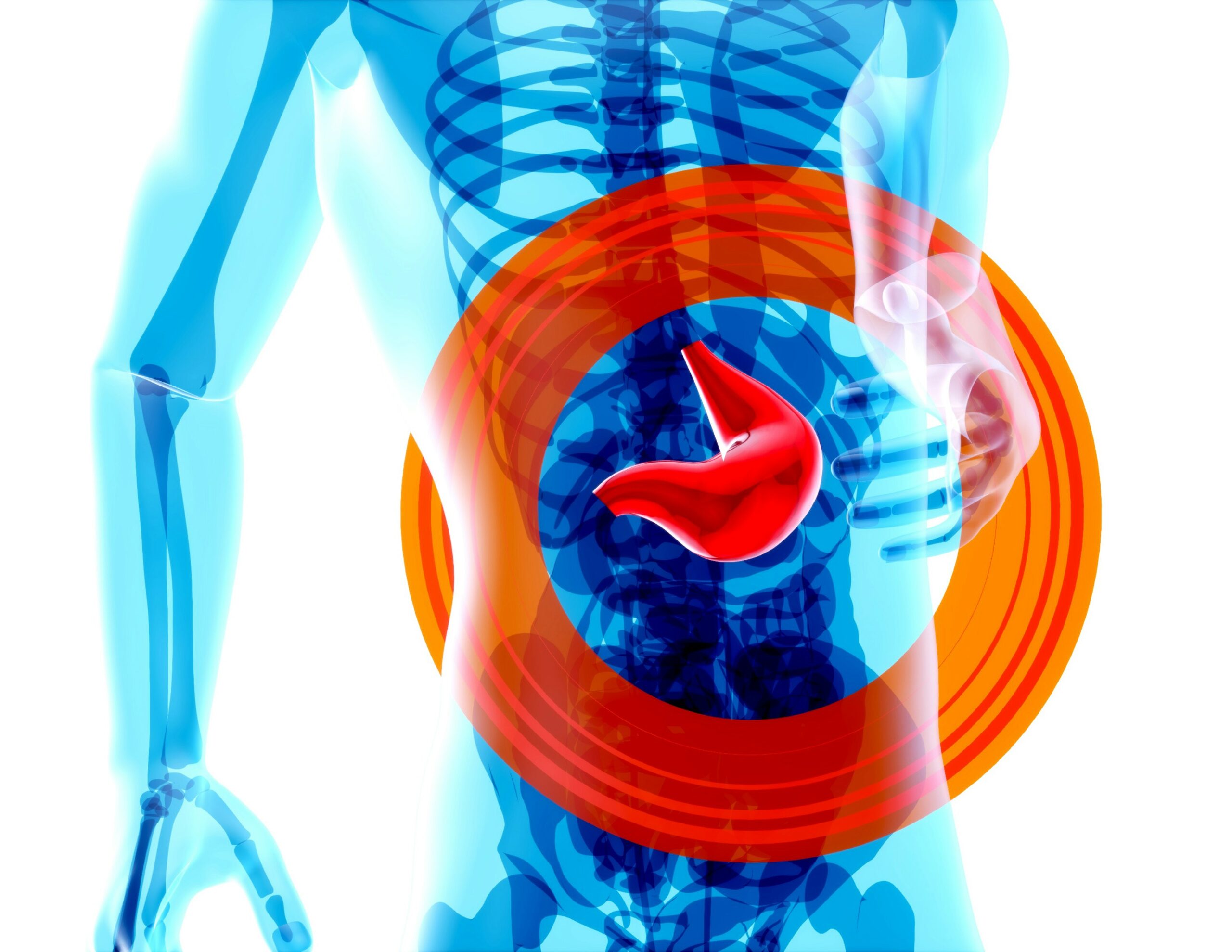
Photo by julien Tromeur on Unsplash
Treatments
1. Conventional Medical Treatment
Clinical assessment:
Evaluation should consider symptom pattern, medication use, dietary factors, Helicobacter pylori infection, and possible underlying gastrointestinal disease. Endoscopy or additional investigations may be appropriate when alarm features or other clinical indications are present.
H. pylori management:
Testing for H. pylori may be appropriate. If infection is confirmed, eradication therapy should be provided according to current treatment guidelines and local antimicrobial-resistance patterns.
Acid-suppressive therapy:
A trial of a proton-pump inhibitor (PPI), such as omeprazole or pantoprazole, may be considered, particularly when epigastric pain or burning is prominent.
Other pharmacological options:
Depending on the predominant symptoms and individual patient factors, prokinetic medicines or selected neuromodulators may be considered when initial treatment is insufficient.
Diet and lifestyle:
Smaller regular meals and avoidance of foods or beverages that consistently provoke symptoms may be helpful. Excessive alcohol, smoking, and unnecessary use of gastric-irritating medicines should be avoided.
Persistent vomiting, gastrointestinal bleeding, unexplained weight loss, anemia, progressive difficulty swallowing, or other alarm features require appropriate medical evaluation.
2. Naturopathic Treatment — Phytotherapy & Physical Measures
Phytotherapy:
- Certain standardized herbal combinations containing peppermint and caraway oils may provide symptomatic benefit in some patients with functional dyspepsia.
- Chamomile preparations may traditionally be used for mild digestive discomfort and gastrointestinal relaxation.
- Herbal preparations should be selected cautiously because some products may interact with medicines or aggravate reflux and other gastrointestinal symptoms.
Physical and lifestyle measures:
Regular meal patterns, adequate hydration, sufficient sleep, stress management, and identification of individual dietary triggers may support gastrointestinal wellbeing.
Relaxation techniques, gentle physical activity, and diaphragmatic breathing may be useful supportive measures, particularly when symptoms are influenced by stress.
Complementary approaches should not delay investigation of persistent, worsening, or unexplained gastrointestinal symptoms.
3. TCM Herbal Therapy — Differentiation By Syndrome
TCM Herbal Therapy for Digestion
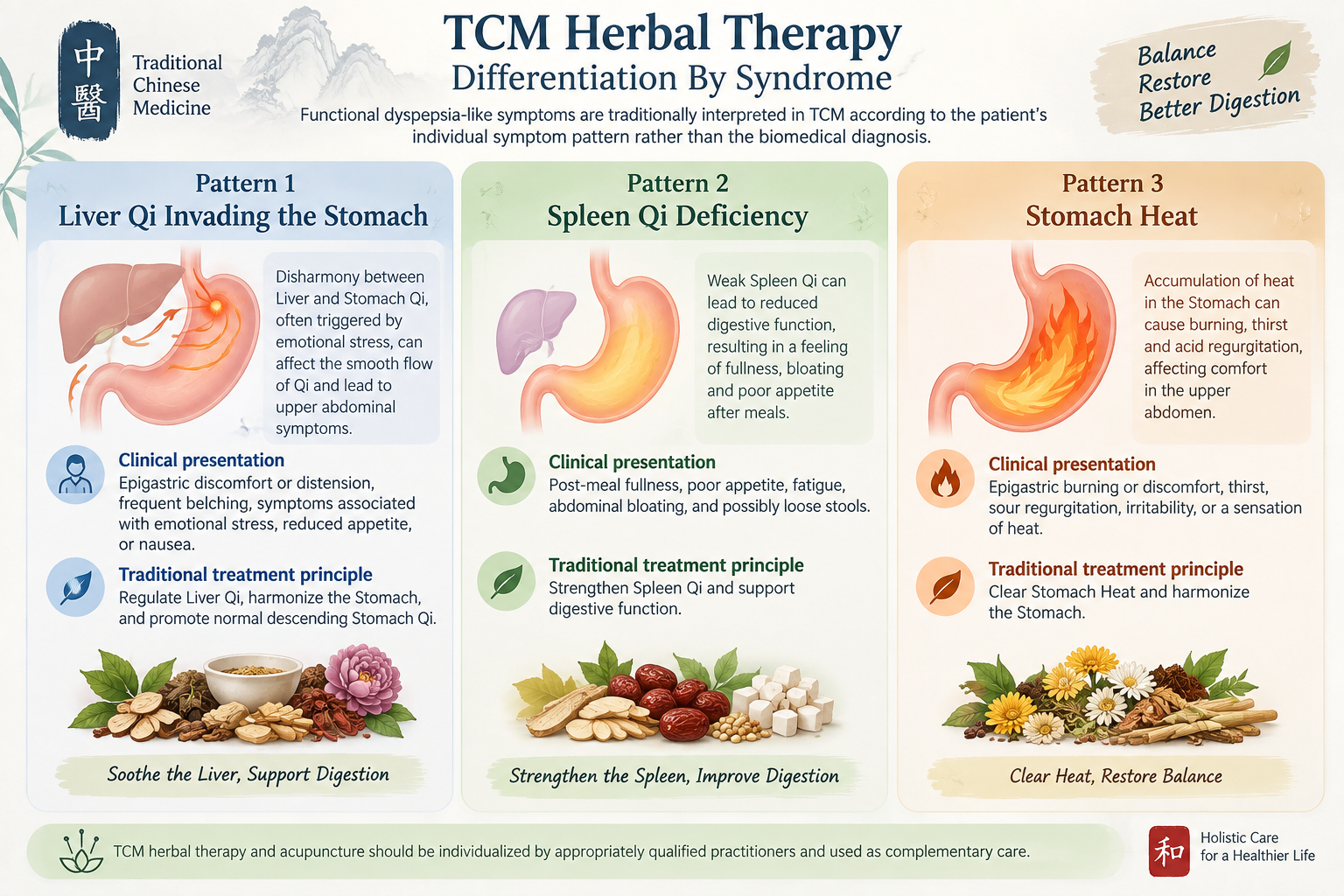
Functional dyspepsia-like symptoms are traditionally interpreted in TCM according to the patient’s individual symptom pattern rather than the biomedical diagnosis.
Pattern 1: Liver Qi Invading the Stomach
Clinical presentation: Epigastric discomfort or distension, frequent belching, symptoms associated with emotional stress, reduced appetite, or nausea.
Traditional treatment principle: Regulate Liver Qi, harmonize the Stomach, and promote normal descending Stomach Qi.
Pattern 2: Spleen Qi Deficiency
Clinical presentation: Post-meal fullness, poor appetite, fatigue, abdominal bloating, and possibly loose stools.
Traditional treatment principle: Strengthen Spleen Qi and support digestive function.
Pattern 3: Stomach Heat
Clinical presentation: Epigastric burning or discomfort, thirst, sour regurgitation, irritability, or a sensation of heat.
Traditional treatment principle: Clear Stomach Heat and harmonize the Stomach.
TCM herbal therapy and acupuncture should be individualized by appropriately qualified practitioners and used as complementary care.
4. Ayurvedic Treatment — Phytotherapy & Nutrition
Pathogenesis:
Functional digestive complaints may traditionally be interpreted in Ayurveda as disturbances of Agni (digestive function), sometimes accompanied by imbalance involving Vata, Pitta, or Kapha according to the individual’s presentation.
Traditional approaches:
- Dietary recommendations are individualized according to symptoms, digestive tolerance, and constitution.
- Regular meal timing and mindful eating are traditionally emphasized.
- Certain Ayurvedic herbs and preparations have historically been used to support digestion and gastrointestinal comfort.
- Stress reduction, adequate sleep, and appropriate daily routines may support overall digestive wellbeing.
Nutrition:
Smaller, regular meals and foods that are well tolerated may be preferred. Very large meals and foods that consistently trigger bloating, burning, fullness, or discomfort should generally be reduced.
Ayurvedic herbal preparations should be medically reviewed for potential adverse effects and interactions with conventional medicines.
5. Physiotherapeutic / Manual & Exercise Approaches

Move Better, Feel Better, Live Healthier
Regular moderate physical activity may support general health, stress management, gastrointestinal function, and overall wellbeing.
Gentle walking, diaphragmatic breathing, relaxation exercises, and other low-to-moderate intensity activities may be useful supportive approaches. Exercise immediately after large meals or activities that consistently aggravate upper gastrointestinal symptoms should be avoided.
Manual, TCM, or Ayurvedic approaches should remain complementary and should not delay appropriate medical evaluation of persistent or worsening dyspeptic symptoms.
Not Sure Which Treatment Is Right for You?
Not sure which treatment or specialist you need? Speak with our medical team to discuss your symptoms and find the right care for your needs.

